The Gentle Giant: Why Mandelic Acid Is the Best AHA for Beginners
Ready to level up your skin texture but worried about irritation? Discover why Mandelic Acid is the 'gentle giant' of skincare. In this guide, I break down the science behind its unique molecular size, why a 5% concentration is the gold standard for beginners, and how to safely incorporate it into your routine to get that glow without compromising your moisture barrier.
Why Mandelic Acid Is The Exfoliant I Recommend To Every Beginner (And Why It's Saved My Skin From Fungal Acne)
If you've ever Googled "best exfoliating acid" you already know how overwhelming it gets. Glycolic, lactic, salicylic, it's a lot for someone who just wants clearer, smoother skin without irritating their face to find something that works for them.
If you're new to chemical exfoliation, dealing with fungal acne, or just have congestion in specific areas (chin and jawline, I'm looking at you), mandelic acid 10% is the one I'd tell you to start with.
What Is Mandelic Acid? (The Science, Simplified)
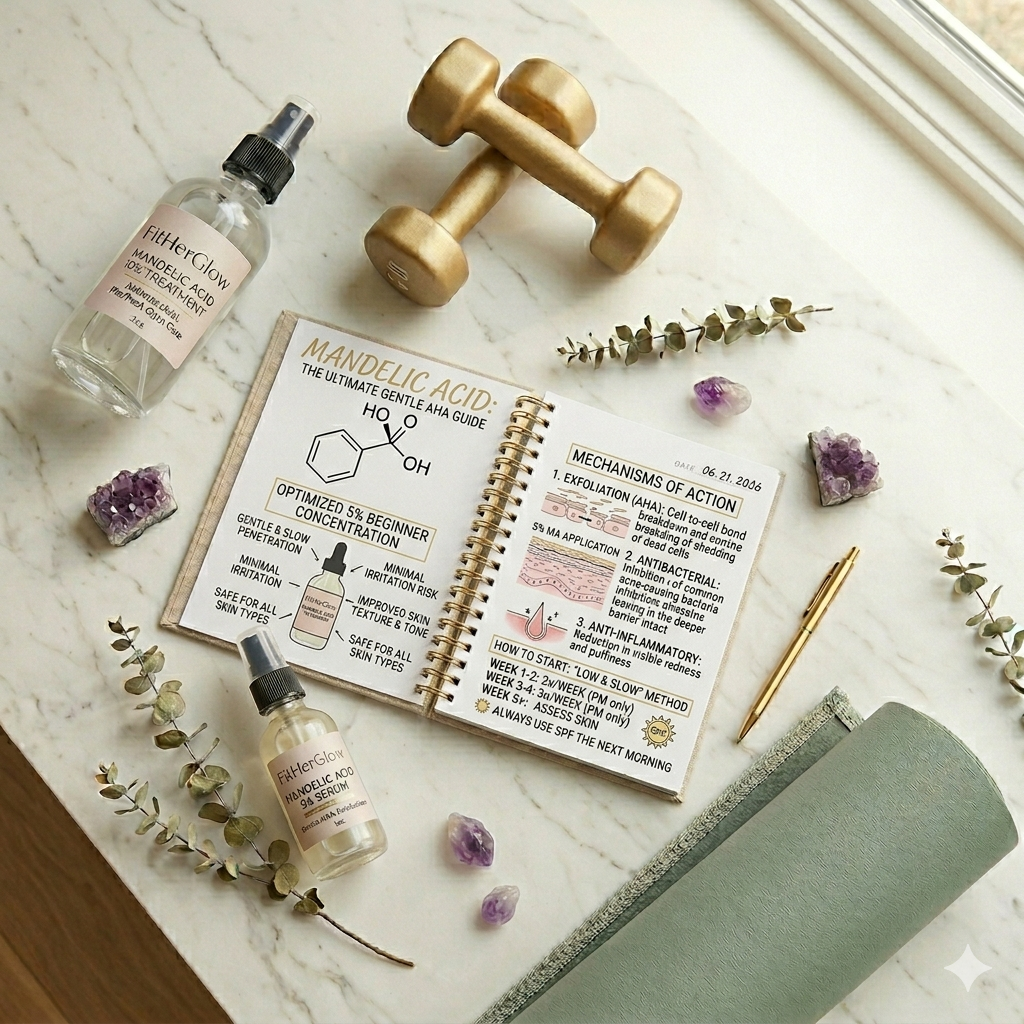
Mandelic acid is an AHA (alpha-hydroxy acid) derived from bitter almonds. What makes it different from other AHAs like glycolic acid is its molecular size — mandelic acid has a much larger molecule structure. Acne & Hyperpigmentation: It has natural antibacterial properties that help clear pores, regulate sebum, and fade dark spots or melasma.
Why does that matter? Because a bigger molecule means it penetrates the skin more slowly and gently. Instead of flooding your skin all at once like smaller-molecule acids can, mandelic acid works at a controlled pace. Same exfoliating benefits, way less risk of the redness, stinging, and irritation that often comes with starting acids for the first time.
This is exactly why it's become my go-to recommendation for anyone who's never used an exfoliating acid before.
Why It's The Most Beginner-Friendly Acid Out There
A lot of people get scared off chemical exfoliants because their first experience was harsh — tight skin, peeling, redness that lasted for days. That's usually a sign the acid was too strong, too concentrated, or just not the right fit for that person's skin.
Mandelic acid at a 5% concentration sidesteps most of that. Here's why it works so well for beginners:
Slower absorption, gentler results. Because of its larger molecule size, it doesn't shock your skin barrier the way smaller acids can.
Lower risk of irritation. Even people with sensitive or reactive skin tend to tolerate mandelic acid well, especially at a beginner-friendly 5%.
Still genuinely effective. Gentle doesn't mean weak. It still exfoliates dead skin cells, helps fade post-acne marks over time, and smooths texture — just without the harsh trade-off.
If you've tried acids before and your skin freaked out, mandelic acid is usually the one that finally clicks.
Why Exfoliation Matters In The First Place: Cell Turnover
Before we get into the fungal acne and congestion benefits, it helps to understand why exfoliating acids work at all — and that comes down to something called cell turnover.
Your skin is constantly making new cells in its deeper layers and pushing older, dead cells up to the surface to eventually shed off. When you're young, this cycle moves pretty quickly. But as we age, get sun damage, or just naturally slow down, that turnover process drags. Dead skin cells stick around longer instead of shedding the way they're supposed to.
Here's where it becomes a problem: those dead cells don't just sit on top of your skin looking dull. They can build up around your pores and mix with oil and sweat, creating a literal polo bacteria. That buildup is a huge part of what leads to clogged pores, blackheads, texture, and congestion in general.
This is exactly what mandelic acid helps with. It speeds up that cell turnover process, gently sweeping away the dead skin cells that would otherwise sit there clogging things up. Instead of dead skin building up and trapping oil, bacteria, and sweat underneath it, that surface layer gets cleared on a more regular basis — which means fewer opportunities for pores to get blocked in the first place.
For anyone who works out and sweats a lot like I do, this matters even more. Sweat plus a buildup of dead skin cells is basically a recipe for congestion. Keeping that turnover process moving is one of the simplest ways to stay ahead of it.
The Fungal Acne Connection
This is the part that made me actually fall in love with this ingredient.
If you deal with fungal acne (those small, uniform, itchy bumps usually along the hairline, chest, or jaw that don't respond to normal acne treatments), you already know how limited your ingredient list is. Most exfoliating acids and acne treatments don't touch fungal acne — some can even make it worse.
Mandelic acid has natural antibacterial and antifungal properties. That means it's not just exfoliating dead skin on the surface, it's also helping to manage the yeast overgrowth (technically called Malassezia) that causes fungal acne in the first place.
For someone like me who sweats a lot from training and is genuinely prone to fungal acne, having an exfoliant that actually helps the problem instead of ignoring it (or worsening it) was a real turning point.
Why It's So Good For Congestion In Specific Areas
Most of us don't deal with breakouts evenly across our whole face. It's usually around the chin, jawline, hairline, maybe the back or chest if you're someone who works out a lot and deals with body congestion too.
Mandelic acid is great for this because:
It helps clear out clogged pores and blackhead-prone areas without over-exfoliating the rest of your face
Its gentle nature means you can actually use it consistently on stubborn areas without your skin rebelling
It works on texture and congestion at the same time it's managing fungal acne risk — which is honestly rare for one single ingredient to do
If your congestion is concentrated in one or two spots rather than spread out everywhere, this is the acid that handles it without you needing five different products.
My Honest Routine With It
I don't use mandelic acid as a once-in-a-while treatment. I use it consistently as part of my normal routine, usually starting a few nights a week and building up from there depending on how my skin responds.
Starting Out — I'd recommend starting 2-3 nights a week to see how your skin tolerates it before increasing frequency.
Application — After cleansing, before moisturizer. Let it fully absorb before layering anything else on top.
Sun Protection (Non-Negotiable) — Like any exfoliating acid, it can increase sun sensitivity. SPF the next morning isn't optional, it's mandatory.
Patience — You won't see dramatic overnight results. Consistency over a few weeks is where the real changes in texture, clarity, and congestion show up.
Why I Recommend It To Literally Everyone Starting Out
I only talk about what I personally use and trust, and mandelic acid 10% has earned a permanent spot in my routine. It's the rare ingredient that's gentle enough for true beginners, but still effective enough to handle fungal acne and stubborn congestion that more aggressive treatments often make worse.
If you've been intimidated by chemical exfoliants or you've tried acids before and your skin didn't agree with them, this is the one I'd tell you to try next.
I'll link the exact one I use below. 👇